The search goes on

Somewhere out there are the perfect words, a phrase that unlocks wisdom and peace and understanding and love and no more hassle and din and hatred and discord.

Every day we log onto social media or otherwise check into the world to browse around for those special words.

And in a meme or a big quote with a pretty picture, we pause and say, yes, I like that thought, it needed to be said.

But the fight goes on, and peace skitters away in a cloud of dust and invective.

We are not so easily defeated, so we lick our wounds and keep searching for the perfect words to calm the storm. When we can’t find them, we sit down and try to craft them ourselves.

A long time ago now, someone wrote, “Come on people now, smile on your brother — Everybody get together, try to love one another right now.”

That was close — oh, so close — maybe that’s the phrase, those are the words to unlock the love we all desire.

“No, no, it’s misogyny,” someone cries. “Why not smile on your sister?!”

[sigh]

In praise of guilty pleasures

“Guilty pleasures” are usually defined as something not-literature or otherwise not-classy that you enjoy anyway, and it feels a little like playing hooky when you read or watch or listen to it. Where does the guilt come from?

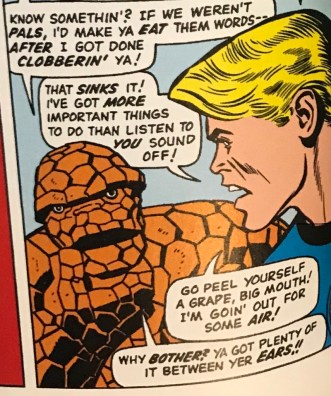
My guilty pleasure was comic books, best of all Spider-Man and the Fantastic Four, the early days of Marvel Comics when Stan Lee and friends were just getting started. They were my gateway drugs to Nathaniel Hawthorne and Mark Twain and Emily Dickinson and George Eliot, but I digress: Even if I didn’t later discover the “appropriate” classics, the Marvel stories gave me pleasure, and that fueled an eagerness to read, and that my friends is a good thing.

Read, and the world opens up to you — in fact, worlds, plural, brilliant vast worlds of possibility.

So you love detective stories or space opera or thrillers with their explosions and aliens and things that go bump in the night? So? You’re reading — you’re delighting in the power of these odd heiroglyphs that represent words and tell stories and pass along the wisdom of the ages.

In the film Serenity, a pastor’s dying words are, “I don’t care what you believe, just believe it.” He means to say a belief in a higher power, a higher calling, anything higher — it lifts you.

I don’t care what you read, just read it. And there’s no need to feel guilty about the pleasure it gives you. You’re connecting with another mind through words, and that is something special.

The gift of a try

“I don’t know if I can do this,” you say, but the fact that you voice that thought means you’re willing to try, and that’s the difference.

You didn’t say “I can’t,” and you’re willing to see if you can.

That’s how everything moves forward: by testing your personal limits to find what you can do. More often that not, it’s more than you would have expected.

You can climb that mountain after all, but first you had to say “I don’t know if I can do this” and start, to see how far you could go — how much of “this” was possible, and the next thing you know is that you can do more than you knew.

“Do or do not. There is no ‘try,’” Yoda said. But to try is to start doing, and when you give it a try, you often find you can finish, look back and say, “I did it. I didn’t know if I could, but it was worth a try, and I discovered I could.”